Checklist for Industrial Bolting Materials in Riyadh
Complete Checklist Before Purchasing Industrial Bolting Materials
Purchasing industrial bolting materials for oil & gas, petrochemical, or large-scale construction projects requires careful planning and adherence to quality standards. Using the wrong bolts, nuts, or studs can lead to operational failures, safety hazards, and costly downtime.
Understanding the Complete Checklist Before Purchasing Industrial Bolting Materials ensures that your procurement process in Riyadh, Saudi Arabia is thorough, compliant, and safe. BlueSky Arabian Steel provides certified, high-strength industrial fasteners and technical guidance to support every stage of procurement and installation.
Why a Checklist Is Crucial
A detailed checklist prevents mistakes such as:
- Buying uncertified or counterfeit fasteners
- Selecting bolts with incorrect material grades
- Overlooking environmental factors affecting performance
- Failing to verify documentation and traceability
Industrial projects in Riyadh demand high-quality, certified fasteners to meet API, ASTM, and ISO standards. A comprehensive checklist streamlines procurement, reduces errors, and ensures long-term reliability.
Key Items in the Industrial Purchasing Industrial Bolting Materials
1. Verify Supplier Certification
Always source fasteners from certified suppliers who provide:
- API 20E or ASTM-certified bolts and studs
- ISO-compliant manufacturing processes
- Documentation for traceability and audits
BlueSky Arabian Steel in Riyadh is a trusted supplier offering certified and tested industrial bolts and nuts.
2. Check Material Grade and Specifications
Ensure bolts and nuts meet project requirements by verifying:
- Material composition (carbon steel, alloy steel, stainless steel)
- Mechanical properties (tensile strength, yield strength, hardness)
- Heat treatment and corrosion resistance
Correct material selection ensures bolts perform reliably under high pressure and temperature conditions.
3. Confirm Bolt Type and Size
Identify the correct bolt type based on application:
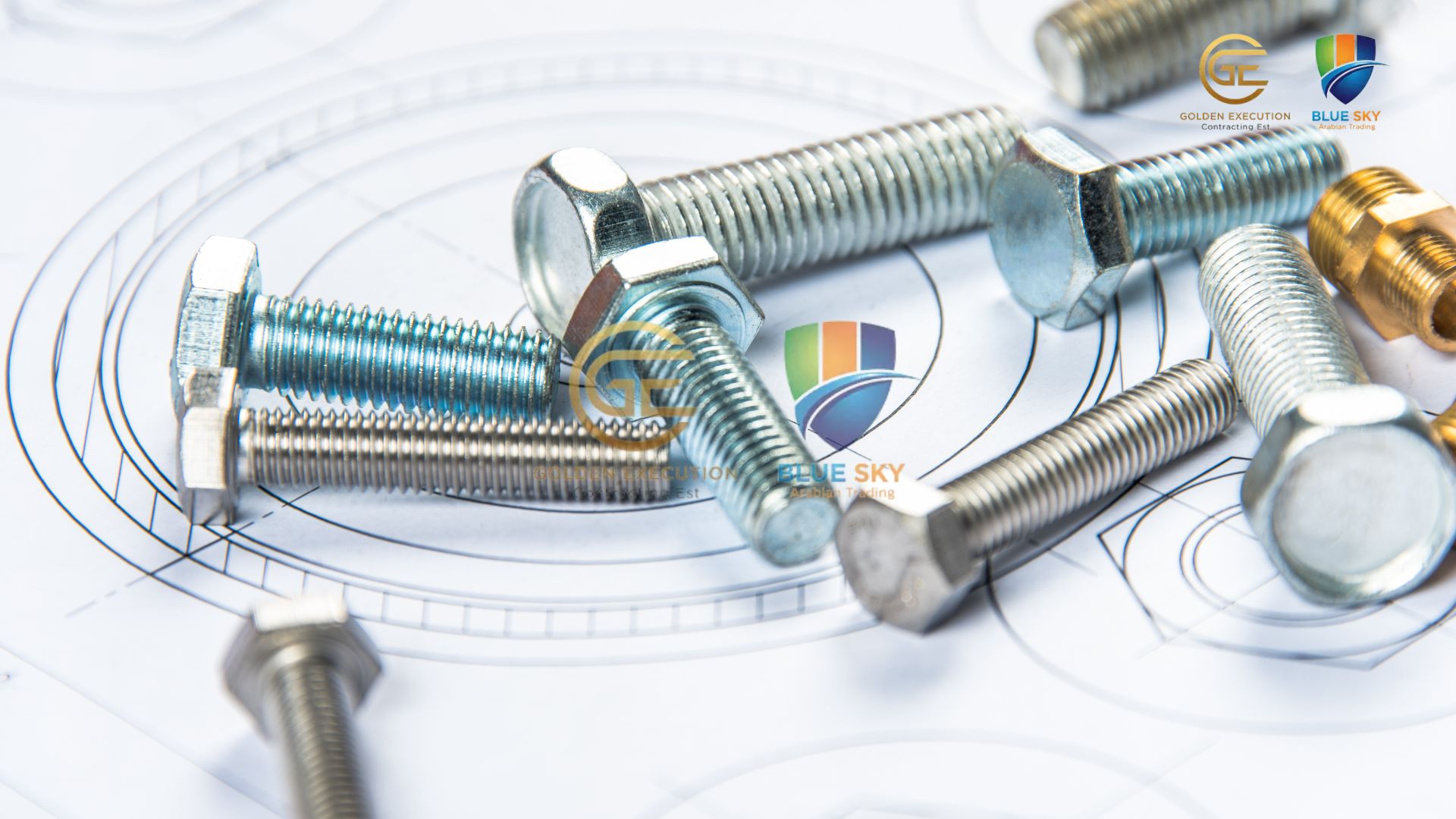
- Full-threaded studs, hex bolts, and high-strength bolts
- Size, length, and thread pitch matching engineering requirements
- Appropriate nuts and washers for assembly
Improper bolt selection can lead to structural weakness or joint failure.
4. Inspect Documentation
Request complete documentation for each batch:
- Mill Test Certificates (MTC)
- Heat treatment records
- Traceability for batch and heat numbers
- Compliance with project specifications
Traceable documentation ensures accountability and quality assurance.
5. Consider Environmental Conditions
Riyadh’s climate poses challenges such as high temperatures, dust, and corrosion. Ensure bolts are:
- Corrosion-resistant for humid or coastal environments
- Suitable for high-temperature and industrial exposure
- Treated or coated for long-term durability
Environmental considerations prevent premature bolt degradation.
6. Check Storage and Handling Practices
Verify that suppliers maintain proper storage:
- Dry, clean, and temperature-controlled warehouses
- Organized inventory to prevent mix-ups or damage
- Proper labeling and packaging for transport
Proper handling preserves the quality and integrity of bolting materials.
7. Third-Party Inspection and Quality Assurance
For critical projects, consider third-party inspection:
- Independent verification of material properties
- Dimensional checks and mechanical testing
- Documentation for compliance and audits
Third-party inspection reduces risk in high-pressure oil & gas and petrochemical installations.
8. Delivery and Logistics Capabilities
Ensure the supplier can deliver on time:
- Availability of local stock in Riyadh or nearby locations
- Flexible shipping for emergency or urgent projects
- Proper packaging to prevent damage during transit
Reliable delivery ensures timely installation and avoids project delays.
9. Technical Support and Consultation
Suppliers should provide guidance on:
- Correct bolt torque and preload
- Installation sequences for flanges and structural joints
- Best practices for assembly and maintenance
BlueSky Arabian Steel offers expert technical consultation to ensure proper use of industrial fasteners.
10. Cost vs Quality
While price is important, never compromise quality for cost:
- Prioritize certified, high-strength fasteners
- Consider long-term operational reliability
- Avoid counterfeit or substandard materials
Investing in quality bolting materials reduces downtime, maintenance costs, and safety risks.
Benefits of Following a Complete Checklist
- Ensures Compliance: Meets API, ASTM, and ISO standards
- Improves Safety: Reduces risk of joint failure or accidents
- Enhances Reliability: Bolts perform under high stress and temperature
- Streamlines Procurement: Avoids delays and errors
- Supports Documentation: Complete traceability for audits and inspections
BlueSky Arabian Steel’s Role in Riyadh
BlueSky Arabian Steel is a trusted industrial fasteners supplier in Riyadh. We provide:
- Certified API 20E, ASTM, and ISO-compliant bolts and studs
- High-strength, corrosion-resistant steel fasteners
- Full traceability and mill test certificates
- Technical guidance for bolt selection, torque, and installation
- Fast local delivery for projects across Riyadh and Saudi Arabia
Partnering with BlueSky Arabian Steel ensures every industrial project meets the highest safety and quality standards.
Final Thoughts
The Complete Checklist Before Purchasing Industrial Bolting Materials is essential for safe, reliable, and compliant industrial projects in Riyadh and across Saudi Arabia. Key points to consider include:
- Supplier certification and traceability
- Correct material, grade, and dimensions
- Environmental suitability and storage
- Third-party inspection and technical support
- Reliable delivery and long-term performance
By following this checklist and partnering with a trusted supplier like BlueSky Arabian Steel, engineers and procurement teams can secure high-integrity, certified industrial fasteners that ensure operational efficiency, safety, and compliance for critical projects.