Top 10 Industrial Fasteners Every Contractor Should Know in 2026
Every construction, infrastructure, manufacturing, and industrial project depends on reliable fastening systems. Whether you’re working on steel structures, bridges, oil refineries, pipelines, or commercial buildings, choosing the right industrial fastener directly impacts safety, durability, and project performance.
Professional contractors understand that different applications require different fastening solutions. Selecting the wrong bolt, nut, or washer can result in structural failures, equipment damage, and expensive maintenance.
In this guide, we’ll explore the Top 10 Industrial Fasteners Every Contractor Should Know and explain where each type is commonly used.
For premium-quality industrial fasteners, visit https://blueskyarabiansteel.com/ to explore a wide range of certified fastening solutions for industrial applications.
Why Industrial Fasteners Matter
Industrial fasteners are designed to join two or more components securely under heavy loads and harsh environments. They are widely used in:
- Steel fabrication
- Construction projects
- Oil & Gas plants
- Petrochemical facilities
- Marine industries
- Renewable energy projects
- Power plants
- Heavy machinery
High-quality fasteners ensure:
- Maximum safety
- Corrosion resistance
- Long service life
- Easy maintenance
- Strong structural integrity
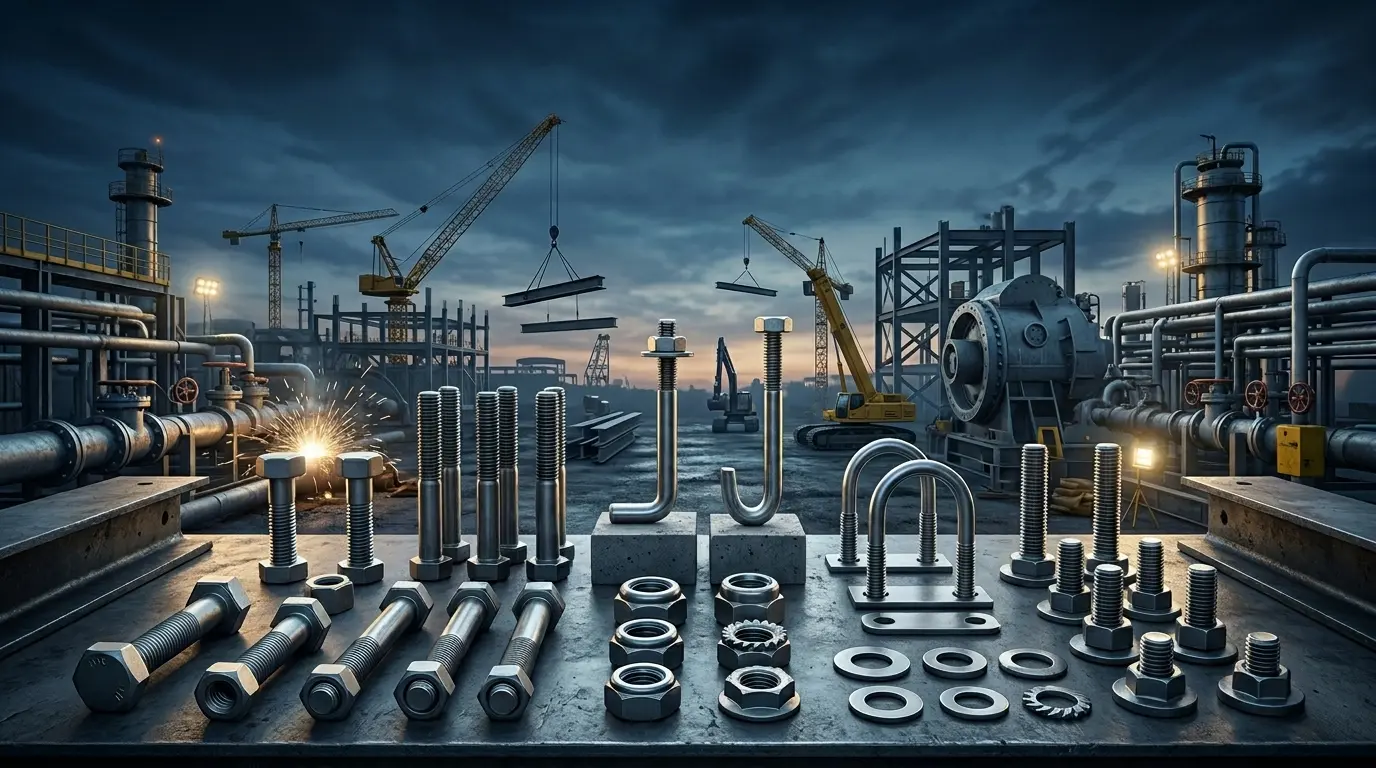
1. Hex Bolts
Hex bolts are among the most commonly used industrial fasteners.
They feature a six-sided head and threaded shaft, making them suitable for structural steel connections and heavy machinery.
Common Uses
- Structural construction
- Heavy equipment
- Machinery assembly
- Steel fabrication
Benefits
- High tensile strength
- Easy installation
- Excellent load-bearing capability
2. Stud Bolts
Stud bolts are threaded rods used with two nuts instead of a traditional bolt head.
They are widely used in flange connections within the oil and gas industry.
Applications include:
- Pressure vessels
- Heat exchangers
- Pipelines
- Petrochemical plants
Advantages
- Easy replacement
- Uniform load distribution
- High-pressure performance
3. Anchor Bolts
Anchor bolts connect structural elements to concrete foundations.
You’ll commonly find them in:
- Industrial buildings
- Transmission towers
- Heavy equipment foundations
- Bridges
Benefits
- Exceptional stability
- Strong concrete grip
- Long-term durability
4. High Tensile Bolts
High tensile bolts are manufactured using premium alloy steel and are designed for heavy-load applications.
Ideal for:
- Steel structures
- Cranes
- Wind turbines
- Industrial plants
Advantages
- Superior strength
- Excellent fatigue resistance
- Reliable under vibration
5. Carriage Bolts
Carriage bolts feature a rounded head and square neck that prevents rotation during tightening.
Best for:
- Wooden structures
- Steel-to-wood joints
- Fencing
- Bridges
Benefits
- Smooth appearance
- Anti-rotation design
- Easy installation
6. U-Bolts
U-bolts are shaped like the letter “U” and are primarily used to secure pipes and tubing.
Applications
- Pipe supports
- Automotive suspension
- HVAC systems
- Marine installations
Advantages
- Strong pipe support
- Corrosion resistance
- Easy maintenance
7. Eye Bolts
Eye bolts include a looped head for attaching ropes, chains, and lifting equipment.
Used in:
- Material lifting
- Marine operations
- Industrial rigging
- Construction sites
Benefits
- Safe lifting
- Heavy load capacity
- Easy attachment
8. Flange Bolts
Flange bolts have an integrated washer-like flange beneath the head.
Common industries include:
- Automotive
- Heavy machinery
- Industrial equipment
- Manufacturing
Benefits
- Better load distribution
- Reduced loosening
- Faster installation
9. Lock Nuts
Lock nuts prevent loosening caused by vibration.
Popular applications:
- Mining equipment
- Industrial machinery
- Vehicles
- Pumps
Advantages
- Secure fastening
- Increased safety
- Longer equipment life
10. Flat Washers & Spring Washers
Washers may seem simple, but they are essential for protecting surfaces and distributing load.
Types include:
- Flat washers
- Spring washers
- Lock washers
Benefits
- Prevent surface damage
- Reduce vibration
- Improve fastening performance
How to Choose the Right Industrial Fastener
Before selecting a fastener, contractors should consider:
Material
- Carbon Steel
- Stainless Steel
- Alloy Steel
Strength Grade
- ASTM Standards
- ISO Standards
- API Standards
Corrosion Resistance
For offshore and petrochemical environments, stainless steel or coated fasteners offer excellent corrosion protection.
Load Requirements
Heavy structural projects require high tensile fasteners with certified mechanical properties.
Environmental Conditions
Consider:
- Temperature
- Moisture
- Chemicals
- Saltwater exposure
Industries That Depend on Industrial Fasteners
Industrial fasteners play a vital role in:
- Oil & Gas
- Petrochemical
- Construction
- Infrastructure
- Renewable Energy
- Marine Engineering
- Mining
- Manufacturing
- Power Generation
Why Quality Fasteners Matter
Using certified industrial fasteners helps contractors:
- Improve worker safety
- Reduce maintenance costs
- Increase equipment lifespan
- Prevent structural failures
- Ensure regulatory compliance
Choose a Trusted Industrial Fastener Supplier
Working with a trusted supplier ensures access to certified, high-performance fastening products that meet international standards.
Whether you need stud bolts, anchor bolts, high tensile bolts, hex bolts, nuts, washers, or custom industrial fasteners, sourcing from an experienced manufacturer guarantees consistent quality and reliable performance.
Explore the complete range of industrial fastening solutions at Blue Sky Arabian Steel:
👉 https://blueskyarabiansteel.com/
Frequently Asked Questions
Which fastener is strongest?
High tensile bolts are among the strongest industrial fasteners used in structural and heavy engineering applications.
Where are stud bolts used?
Stud bolts are commonly used in flange connections, pressure vessels, and oil & gas pipelines.
Why are washers important?
Washers distribute load, protect surfaces, and reduce loosening caused by vibration.
What materials are industrial fasteners made from?
Industrial fasteners are commonly manufactured using carbon steel, stainless steel, alloy steel, and specialty metals.
Which industries use industrial fasteners?
Construction, petrochemical, oil & gas, marine, manufacturing, mining, infrastructure, and power generation industries all rely heavily on industrial fasteners.
Conclusion
Industrial fasteners are the foundation of safe and reliable construction and engineering projects. From hex bolts and anchor bolts to high tensile bolts and lock nuts, each fastener serves a unique purpose in ensuring structural integrity and operational safety.
Understanding the right fastener for each application helps contractors improve project quality, reduce maintenance costs, and achieve long-lasting performance. For premium industrial fastening solutions that meet international standards, explore the extensive product range available at Blue Sky Arabian Steel.
Internal Linking
Use these anchor texts naturally throughout the article to link to:
Suggested anchor texts:
- Industrial Fastener Supplier
- High Quality Stud Bolts
- API 20E Stud Bolts
- Industrial Bolting Solutions
- Stainless Steel Fasteners
- Heavy Duty Industrial Fasteners
- Construction Fasteners
- Petrochemical Fasteners